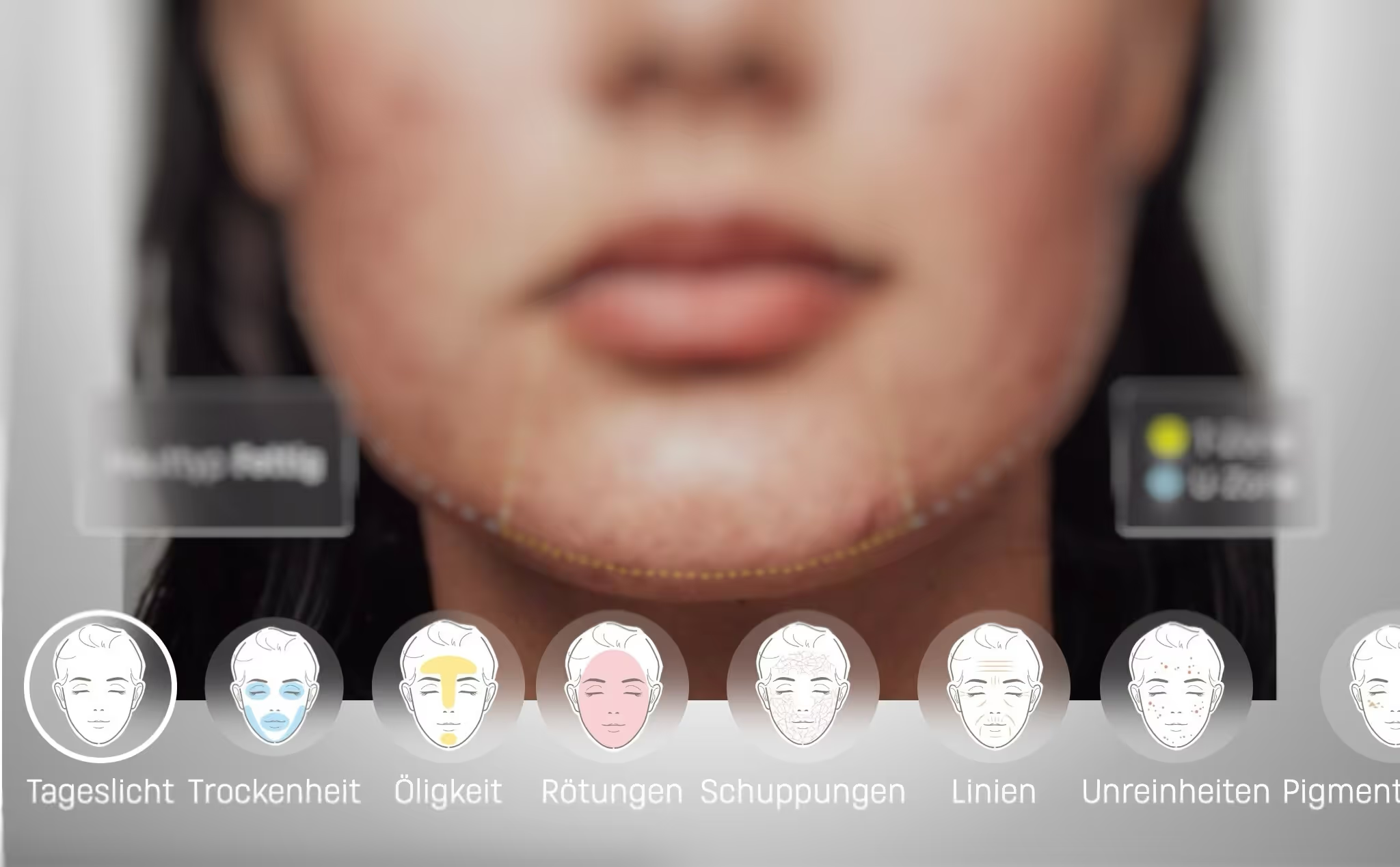
AI skin analysis is a computer vision technology that scores specific skin parameters from a facial image and recommends matching products. Thea Care AI evaluates eight parameters (moisture, oiliness, redness, flakiness, wrinkles, blemishes, hyperpigmentation, and pore size) and returns a numeric score per parameter so brands can ground product recommendations in measurable data.
Why is individual skin analysis important?
A one-size-fits-all strategy does not exist in skincare. Everyone has a unique combination of moisture levels, oiliness, sensitivity, and other factors. This often leads to unsuitable purchases or irritation when products do not match personal profiles.
- Targeted product selection: Addressing skin concerns like redness or blemishes saves money and avoids frustration.
- Sustainability: Customized care helps save resources and reduce product waste.
- Efficiency: A thorough skin analysis allows you to focus on ingredients that actually work.
Overview of Key Skin Parameters
Below, we introduce the eight key skin parameters analyzed by Thea Care AI. For all areas, our AI assigns a score, so you can quickly identify where your skin needs special attention. A high value for a specific parameter usually indicates a need for action.
1. Moisture
What is it about?
Moisture in the skin is one of the most critical factors for a healthy, radiant complexion. It prevents tightness, fine dryness lines, and cracks in the skin barrier.
Scoring: Thea Care AI returns a 0–100 moisture score; higher means drier skin.
Why is it important?
- Dry skin often suffers from flakiness, redness, and a dull appearance.
- Well-hydrated skin looks plumper, more elastic, and less prone to irritation.
Typical ingredients & product recommendations:
- Hyaluronic Acid: Binds large amounts of water and provides intense hydration.
- Glycerin: Helps stabilize moisture levels over time.
- Urea: Gently removes flakes and improves the skin barrier.
2. Oiliness
What is it about?
Oiliness describes how much sebum your skin produces. Some have a shiny film (especially in the T-zone), while others have a drier skin surface.
Scoring: Thea Care AI returns a 0–100 oiliness score; higher means more sebum, weighted toward the T-zone.
Why is it important?
- Oily skin is often prone to blackheads and enlarged pores.
- Excessive sebum production can contribute to acne.
Typical ingredients & product recommendations:
- Niacinamide: Regulates sebum production and refines the skin texture.
- Salicylic Acid (BHA): Penetrates pores and dissolves excess oil.
- Clay: Provides a mattifying effect and absorbs excess oil.
3. Redness
What is it about?
Redness can have various causes: from sensitive skin and rosacea to external stressors (weather, UV exposure, pollution).
Scoring: Thea Care AI returns a 0–100 redness score; higher means more visible erythema across the face.
Why is it important?
- Sensitive or red skin reacts more strongly to skincare products. The wrong product can worsen irritation.
- Aesthetic impact: Redness can make the complexion appear uneven.
Typical ingredients & product recommendations:
- Chamomile & Aloe Vera: Soothe irritated skin.
- Panthenol: Promotes regeneration and reduces redness.
- Azelaic Acid: Reduces redness and works against blemishes.
4. Flakiness
What is it about?
Flakiness often indicates very dry or irritated skin. It may also be associated with conditions like eczema or psoriasis, which warrant clinical evaluation.
Scoring: Thea Care AI returns a 0–100 flakiness score; higher means more visible flakes and dry patches.
Why is it important?
- Visible flakes diminish the skin's appearance and can lead to tightness.
- Skin barrier disruption: Flakiness often signals a damaged or weakened protective function.
Typical ingredients & product recommendations:
- Ceramides: Repair the skin barrier and protect against moisture loss.
- Gentle exfoliants with lactic acid: Remove dead skin cells without causing further dryness.
- Shea Butter: Provides intense care for cracked or flaky areas.
5. Wrinkles (also known as fine lines)
What is it about?
Wrinkles or fine lines develop over time due to a loss of elasticity and collagen. Environmental factors like UV exposure and stress can accelerate this process.
Scoring: Thea Care AI returns a 0–100 wrinkle score; higher means deeper or more numerous lines.
Why is it important?
- Aesthetic concerns: Many people desire smoother, younger-looking skin.
- Prevention: Early care can delay the development of deeper wrinkles.
Typical ingredients & product recommendations:
- Retinol: Boosts collagen production and works against fine lines.
- Hyaluronic Acid: Provides intense hydration and plumps the skin.
- Peptides: Support skin structure and elasticity.
6. Blemishes (Pimples & Blackheads)
What is it about?
Blemishes mainly refer to pimples, blackheads, and other unevenness caused by hormonal fluctuations, increased sebum production, or bacterial processes.
Scoring: Thea Care AI returns a 0–100 blemish score; higher means more active lesions plus post-inflammatory marks.
Why is it important?
- Early detection: Identifying an increase in blemishes early can prevent more severe forms of acne.
- Skin health: Frequent pimples or clogged pores indicate an imbalance.
Typical ingredients & product recommendations:
- Tea Tree Oil: Antibacterial and anti-inflammatory.
- Benzoyl Peroxide: Effective against acne bacteria, but suitable only for more tolerant, non-sensitive skin.
- Retinoids (Vitamin A derivatives): Regulate skin cell renewal and reduce clogged pores.
7. Hyperpigmentation (Spots)
What is it about?
Hyperpigmentation often appears as dark spots or "spots" that form after inflammation (e.g., acne) or excessive sun exposure. Hormonal influences can also play a role.
Scoring: Thea Care AI returns a 0–100 pigmentation score; higher means more pigmented surface as a share of analyzed skin.
Why is it important?
- Uneven complexion: Spots make the skin appear inconsistent.
- Long treatments: Pigmentation issues can be persistent and require consistent care.
Typical ingredients & product recommendations:
- Vitamin C: Helps brighten dark spots and prevents new pigmentation.
- Kojic Acid or Arbutin: Block melanin production.
- Sunscreen (SPF 30 or higher): Prevents existing spots from darkening further.
See also: SkinGen Melanin visualization, which renders sun-damaged pigment that is invisible to the naked eye.
8. Enlarged Pores
What is it about?
Enlarged pores often appear on the forehead, nose, and chin. They are frequently associated with increased sebum production. Genetic factors can also play a role.
Scoring: Thea Care AI returns a 0–100 pore-visibility score; higher means more visible pores, with separate signals for the T-zone and cheeks.
Why is it important?
- Skin texture: Larger pores can make the complexion appear uneven.
- Higher risk of blackheads: Excess sebum and dirt can accumulate more easily in larger pores.
Typical ingredients & product recommendations:
- Salicylic Acid (BHA): Refines pores and removes sebum build-up.
- Niacinamide: Supports the skin barrier and helps "tighten" pores.
- Mattifying creams and toners: Provide a smoother finish and absorb excess oil.
How Thea Care AI Selects Suitable Products
- Analysis of your skin parameters: After uploading a photo or completing a brief questionnaire, our AI skin analysis determines the key scores for your parameters.
- Matching with product databases: Thea Care AI compares your scores with an extensive database of skincare products and ingredients.
- Personalized recommendations: You receive a targeted selection tailored to your main concerns (e.g., hyperpigmentation) while also considering multiple factors (e.g., an oily T-zone).
- Continuous monitoring: Your skin can change over time due to seasons or hormonal shifts. Regular skin analysis with Thea Care AI ensures your care remains up-to-date.
Conclusion: Achieve Healthier Skin with Thea Care AI
Whether it's moisture, oiliness, redness, flakiness, blemishes, hyperpigmentation, or enlarged pores, each skin parameter tells a unique story about your complexion. Thea Care AI helps you understand and address these stories. Instead of random skincare experiments, you receive informed product recommendations based on scientifically validated methods and modern algorithms.
- Higher conversion: Recommendations matched to detected parameters reduce drop-off and lift add-to-cart rates.
- Lower returns: Consumers who match a product to their actual skin state are less likely to return it as unsuitable.
- Better assortment signal: Aggregated parameter data tells brands which product gaps to fill in the catalog.
Want to see Thea Care AI run against your own catalog? Book a discovery call and we'll show how the parameter scores map to the products you sell, and how brand managers use them to lift conversion and reduce returns. Looking further out, see where we are taking the platform with multimodal AI in skin analysis.
Frequently asked questions
How accurate are the parameter scores?
Thea Care AI's parameter scores are produced by computer-vision models trained on dermatologist-labeled images. Accuracy varies by parameter: well-defined visual signals like wrinkles and enlarged pores score most reliably; softer signals like moisture and slight redness are harder to read reliably from a single image. For a deeper look at the methodology, see how accurate AI skin analysis really is.
Which parameter scores are most predictive of purchase?
It depends on the brand's portfolio. There is no universal "winning" parameter: the predictive power of a score is downstream of which products the brand actually sells. A brand with a strong pigment-correction line sees hyperpigmentation scores convert hard; a brand with nothing in that category generates curiosity from the same score but no purchase. Anti-aging-heavy brands see wrinkle scores drive conversion; oil-control-heavy brands see oiliness scores drive baskets; pharmacy ranges with a sensitive-skin focus see redness and barrier signals move SKUs. The honest pre-launch exercise for a brand manager is to map every parameter against the existing catalog and flag the ones where the catalog has no credible response, those become signals for assortment expansion, not near-term conversion.
Do the scores change between analyses?
Yes. Skin condition shifts seasonally, hormonally, and with care routines. Returning consumers see meaningful score changes within four to eight weeks of using a recommended routine, which is also a useful retention trigger for brand managers. For the distinction between real change and model noise on identical skin, see Consistency in AI skin analysis: why reliable results build trust.
Can a brand map scores to its own product catalog?
Yes. Thea Care AI accepts a brand's ingredient and SKU data and matches parameter scores to the closest products in that catalog. This mapping is part of the account onboarding step before launch.