1. Introduction
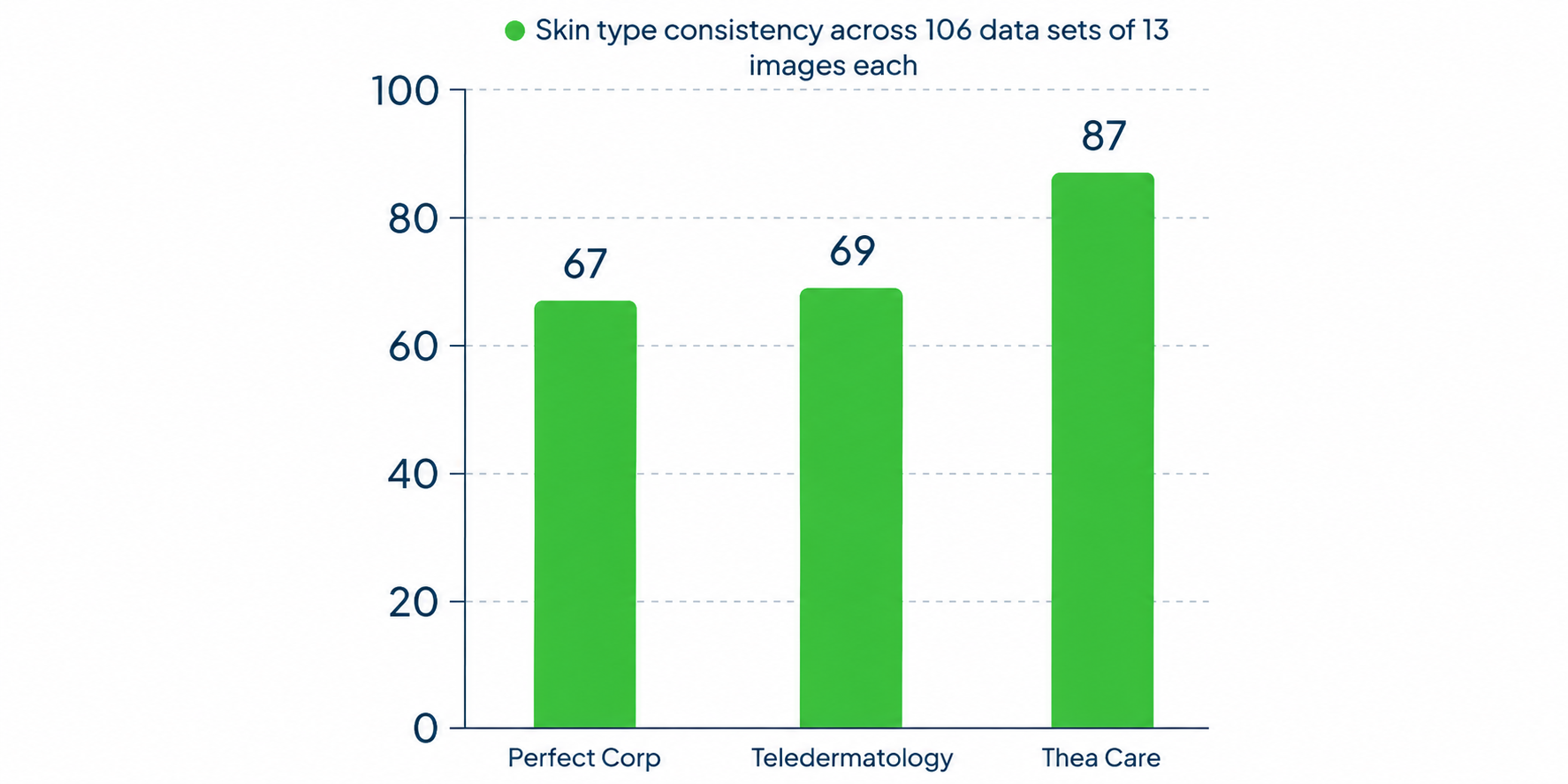
Consistency in AI skin analysis means producing repeatable, stable results when the same person is analyzed twice under similar conditions — same skin type classification, same product recommendations, no radical swings between sessions. For brands integrating AI skin analysis into e-commerce or retail, consistency is the difference between a trusted tool and a gimmick. This article breaks down what drives inconsistency (lighting, camera, user behavior), what the consequences are, and how to engineer for stability.
Imagine someone performs the analysis twice in a row and gets “dry skin” as a result once and “oily skin” the next. That discrepancy not only confuses customers but also severely undermines trust in the AI technology. Consistency sits alongside accuracy as the second leg of trust — see AI skin analysis accuracy for the matching deep dive.
2. What Does Consistency Mean in AI Skin Analysis?
Consistency stands for repeatable and stable results under similar conditions. For example, if the same person performs the skin analysis shortly after the first attempt without significantly changing factors (lighting, distance, camera angle, etc.), the results should largely match.
- No radical deviations: Minor differences are normal, such as in the assessment of moisture levels. Major shifts—like from “very dry” to “oily”—are a clear warning sign.
- Same or similar product recommendations: If a user is recommended a hydrating serum once and a clarifying anti-acne product the next time, without any objective change in their skin condition, the solution seems unreliable.
Especially in e-commerce, a lack of consistency leads to a loss of trust—a bad outcome for everyone involved. After all, one of the main arguments for AI-based skin analysis is its promise of being customer-specific and reliable.
3. Factors Influencing Stability of Results
3.1 Lighting Conditions
Lighting is a significant disrupting factor. Different light intensities or directions can either highlight or conceal skin imperfections.
- Intensity: In a dark room, wrinkles or shadows appear more pronounced. On the other hand, overly bright light can make the skin look smoother.
- Direction: Backlighting can distort facial contours, while side lighting emphasizes shadows.
- Outdoor vs. Indoor: Natural daylight differs significantly from artificial lighting. Even the time of day can have an impact (softer light in the morning, harsher light at noon).
3.2 Device and Camera Quality
A simple laptop webcam delivers different color tones and sharpness levels than a modern smartphone camera.
- Resolution: Low resolution can cause critical details, like fine wrinkles or subtle redness, to be lost.
- Automatic Image Optimization: Some devices activate beauty modes or HDR features, manipulating the image.
- Hardware-Driven Color Deviations: Different camera manufacturers calibrate their sensors differently, leading to varying skin tones.
3.3 User Behavior
How the person stands, sits, or looks into the camera also matters.
- Face Angle: A slight head tilt can change the visibility of certain facial areas, such as under-eye circles or cheekbones.
- Distance: Standing too close or too far from the camera results in different image sections being captured by the algorithm.
- Facial Expressions: Smiling in the first attempt and frowning in the second can highlight different wrinkles.
All these influences make it more or less challenging for AI to extract true skin parameters and consistently generate reliable results.
4. Consequences of Inconsistency
When results vary significantly despite minimal changes, it has consequences for both end users and B2B companies:
- Loss of Consumer Trust: Those who receive different results no longer believe in the “intelligence” of the technology. Next time, they may prefer traditional methods or regard the entire system as mere gimmickry.
- Doubts About the Technology: For brands investing in AI solutions, lack of reliability poses a problem. Ultimately, this technology becomes part of the brand’s promise.
- Negative Customer Reviews: In the age of social media, bad experiences spread quickly. Inconsistent skin analysis risks poor reviews and reduced recommendations.
5. Measures to Ensure Greater Stability
5.1 Technical Optimizations
- Robust Image Processing: AI developers should ensure algorithms are calibrated for various lighting conditions. A form of “light balancing” can correct extreme exposure differences and color distortions.
- Quality Checks: Thea Care runs an automatic image quality check that rejects blurry or off-frame uploads before analysis. Some systems even detect whether a person is too close or too far from the camera.
- Device-Agnostic Standards: A broad testing phase on common smartphones, laptops, and tablets helps mitigate differences between cameras. Regular updates keep the system up-to-date.
5.2 User Guidance
- Lighting Tips: Short suggestions before the analysis (“Please stand in front of a window with sufficient daylight.”).
- Distance Recommendations: A scale or frame within the camera feed can indicate whether the face is at the right distance.
- Simple Step-by-Step Guides: A pop-up guiding users through the process helps avoid incorrect usage. For instance, unnecessary movements or changes in facial expression during the critical moment can be minimized.
5.3 Internal Processes & Quality Assurance
- Regular Test Runs: An internal team or test users can assess the AI under different scenarios (indoor, outdoor, different camera types) and provide feedback.
- Continuous Model Improvement: With each iteration, the AI model learns more. It is crucial to have a data management process in place that incorporates feedback loops.
- Monitoring & Reporting: The system should be continuously monitored. A sudden surge in “erratic results” may indicate a software bug or a poorly trained algorithm.
6. FAQ: Consistency in AI Skin Analysis
How many test runs are needed to validate consistency?
A practical baseline is 3–5 back-to-back analyses by the same person under similar conditions. The skin type classification and top product recommendations should match across all runs. For production rollouts, brands typically run a panel of 20–50 testers across multiple devices and lighting setups before launch.
Does device matter more than lighting?
Lighting is usually the larger driver of variance in everyday use because users control it less than they think. Device differences are predictable and can be calibrated for; lighting changes minute to minute. Both need quality checks, but lighting guidance pays off faster.
What counts as an acceptable variance between two analyses?
Small numeric shifts (a few points on a hydration scale, for example) are normal. The skin type bucket and the top one or two product recommendations should remain stable. Larger jumps — “very dry” to “oily”, or completely different concern detection — indicate a real consistency problem. For the full list, see the 8 supported skin parameters.
Can users self-correct for poor lighting?
Partly. Pre-capture prompts (“face a window”, “no backlight”) significantly reduce extreme cases. The rest has to be handled algorithmically through light normalization and confidence scoring. Treating lighting purely as a user-instruction problem will leave gaps in conversion.
7. Conclusion
Consistency is the cornerstone when it comes to implementing AI skin analysis in the B2B or D2C space. Only when users achieve similar results across multiple attempts will the technology earn their trust. A combination of technical robustness and clear user guidance is essential. For e-commerce brands, this means that a one-time integration of skin analysis is not enough. Continuous observation of results, ongoing testing, and constant fine-tuning are required. Those who follow these steps will benefit from satisfied customers who trust the AI—and thus strengthen their connection to the brand.