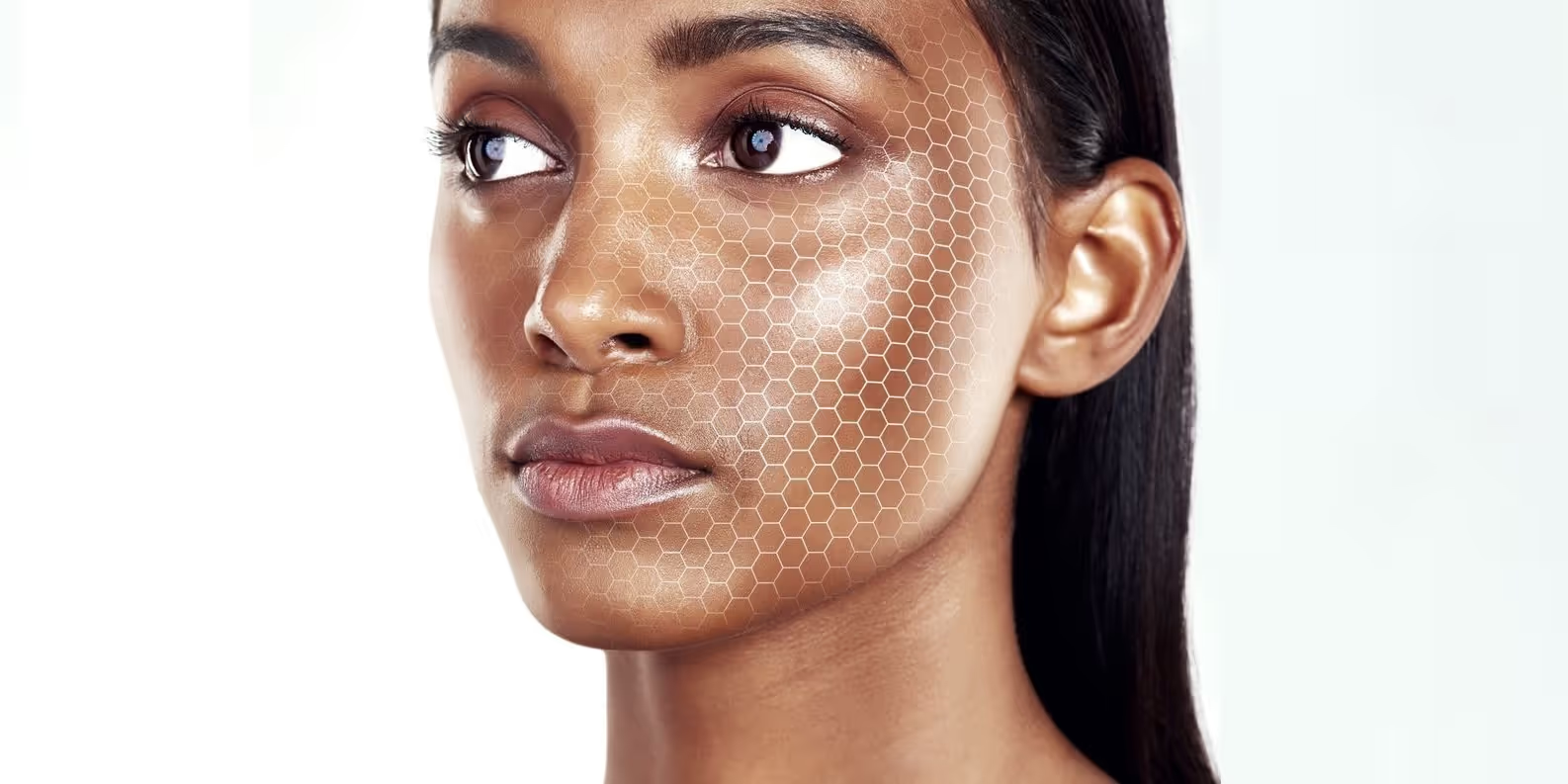
AI skin analysis is a computer vision technology that evaluates the skin from a selfie and recommends matching products. For beauty brands, it shifts personalization from clinic-grade hardware to e-commerce-scale software, with measurable impact on conversion and customer service costs.
AI in skincare involves using cutting-edge technologies to deeply understand and analyze the skin. A typical example is the use of selfies: users take a photo of their facial skin, which is then analyzed by an AI system. The algorithms detect details such as pore size, skin texture, pigmentation spots, dryness, or oiliness. Based on these insights, the AI provides informed recommendations for products and routines that best suit the individual’s skin. This approach not only makes skincare more precise but also much more accessible to consumers. See also: AI skin analysis parameters.
Personalization Through AI
AI enables skincare products and routines to be precisely tailored to the individual needs of the skin. Using advanced algorithms, AI analyzes skin images, identifies patterns such as dryness, redness, or fine lines, and provides personalized product recommendations based on these findings. Industry case studies consistently show that AI-based recommendations lift customer satisfaction compared with self-serve product discovery, because consumers reach a fitting routine on the first try instead of after several disappointing purchases.
For B2B clients, this represents a decisive competitive advantage. Brands and online shops can offer highly personalized consultations with minimal effort, a service that was previously available only in dermatology clinics or high-end spas.
Increased Efficiency Through Automation
By leveraging AI, processes can be automated and optimized. For instance, a skin analysis that would take minutes or even hours to perform manually can now be completed within seconds. This saves not only time but also reduces human errors and costs.
Another example is the automated product recommendation based on skin data and preferences. This eliminates the need to manually sift through extensive product catalogs. This is particularly relevant for companies with large product ranges. According to a Deloitte study (2023), the use of AI reduced customer service costs by up to 30%.
Analytics and Success Measurement
One of AI’s major strengths lies in its ability to comprehensively analyze and evaluate data. Companies can not only assess the effectiveness of the recommended products but also track how strongly customer interactions with the brand have been enhanced.
Key performance indicators (KPIs) such as conversion rates, repeat purchase rates, or average order value should be measured and compared to results from traditional methods. For instance, it can be determined whether customers who receive AI-driven consultations have greater trust in the brand and make purchases more frequently. See also: measuring AI skin analysis ROI.
A prominent example is L’Oréal, which reported a 20% increase in conversion rates in their online shop thanks to their AI-powered skin analysis tools (Source: L’Oréal Innovation Report 2023). See also: Judith Williams AOV case study.
KPIs to track when rolling out AI skin analysis
Brands that treat AI skin analysis as a measurable program — not a gadget — get the most out of it. The KPIs below are the ones that typically move and that B2B account managers should benchmark before and after launch:
| KPI | What it measures | Why it matters |
|---|---|---|
| Conversion rate | Share of analyzer sessions that end in a purchase | Direct revenue lever; AI personalization typically lifts conversion 15–30% over the unassisted baseline |
| Average order value (AOV) | Mean basket size for consumers who completed an analysis | Routine-based recommendations bundle complementary products that consumers would not have picked alone |
| Email opt-in rate | Share of consumers who leave their email after the analysis | The analysis frames a clear value exchange — the consumer gets a personalized routine in return for their email — which lifts list growth |
| Repeat purchase rate | Share of analyzed consumers who return within 90 days | Right-first-time recommendations build trust and reorder behavior |
| Return rate | Share of orders returned post-purchase | Better skin-product matching means fewer regret returns and lower reverse-logistics cost |
| Customer service ticket volume | Pre-purchase product questions per 1,000 sessions | Self-serve analysis offloads advisory work from the service team |
Frequently asked questions
Does an AI skin analysis replace a dermatologist?
No. AI skin analysis is a cosmetic recommendation tool, not a medical diagnostic. It points consumers to suitable skincare products and routines; for clinically relevant skin conditions consumers should still see a dermatologist.
What image quality does the analysis need?
A standard front-facing smartphone selfie in even daylight is enough. Heavy makeup, harsh shadows, or filters lower accuracy, so well-designed analyzers prompt the consumer for a retake when the image is too low-quality to evaluate reliably.
How long does it take to integrate AI skin analysis into an existing online shop?
Most accounts launch it as a standalone webapp that the brand shop links to from product collection pages, blog, navigation, PDPs, newsletter, or paid traffic — that path needs little integration work and can go live within a few days. Iframe embeds and direct API integrations are both possible but chosen less often, because they require more development effort on the brand side. Real timelines range from two days to about a month and depend less on the analyzer itself than on the brand's setup and resources — above all on product-data quality, which determines how cleanly the recommendation engine can map analysis results back to the catalog.
What happens to the photo data?
On well-designed systems the selfie is processed for analysis and either discarded immediately or stored only with explicit consumer consent, on EU servers, behind access controls. Brand managers should ask any vendor where images are hosted and how long they are retained.
How is AI skin analysis different from a skin-type questionnaire?
A questionnaire relies on consumer self-assessment, which is often wrong — most consumers misjudge their own skin type. AI skin analysis uses computer vision on an actual image of the skin, which is why image-based analysis produces more accurate recommendations than questionnaires alone.
Conclusion
The integration of artificial intelligence into skincare is not just a trend but a critical step toward a more personalized and efficient future. For companies operating in the B2B sector, there are tremendous opportunities to delight customers with innovative solutions. Furthermore, data analysis enables continuous optimization of the deployed AI systems and precise success measurement. This ensures that the technologies used are not only modern but also sustainably effective.