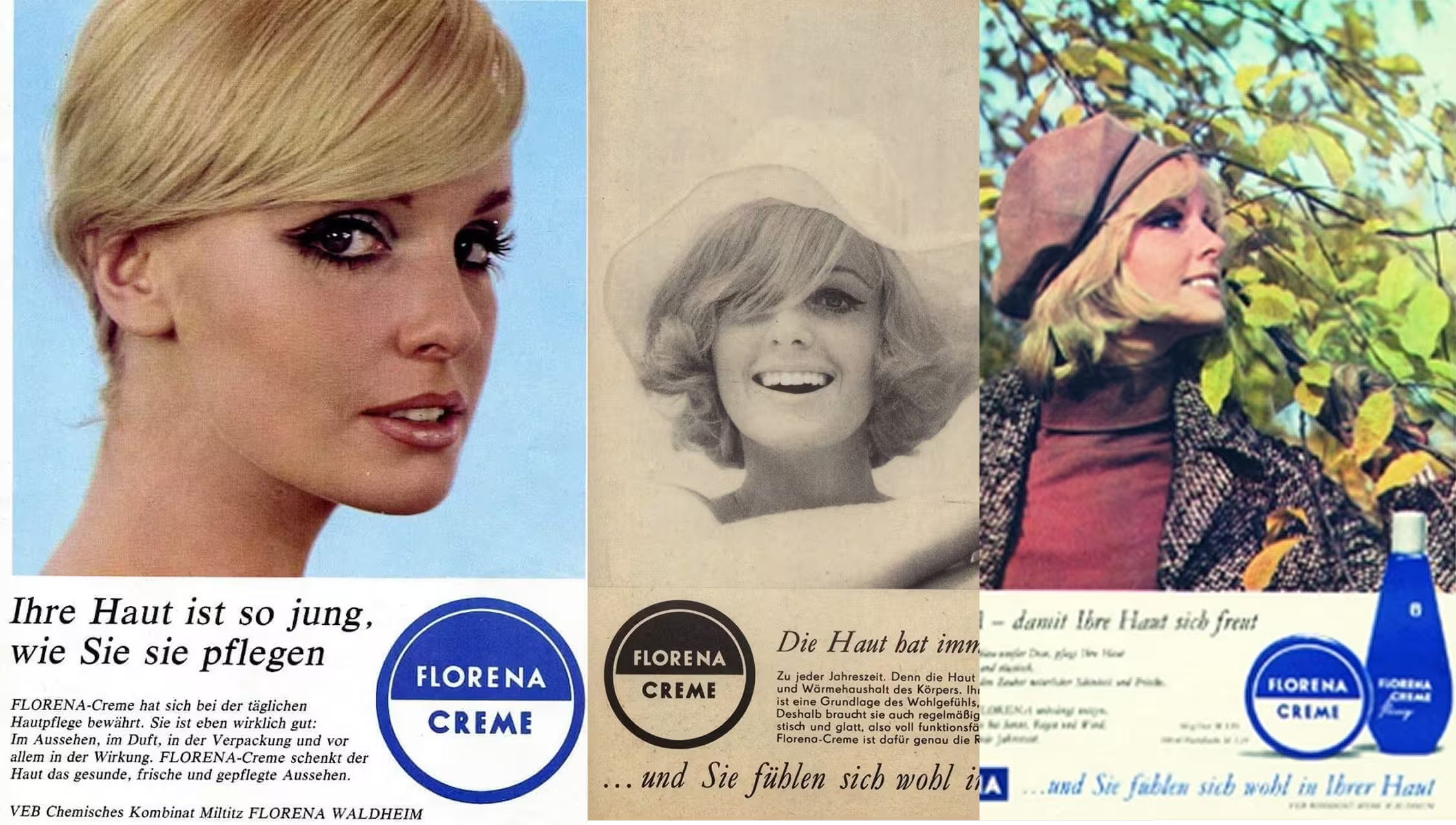
Heritage skincare brands rarely fail because they look old. They fail because they behave old — anchored in generational memory rather than the personalization, integrated technology, and contextual support that 2026 consumers expect. The fix is rarely a €100,000 rebrand. It is a digital experience layer that lets the iconic packaging stay exactly where it is. See also: the Physiogel modernization case study and the NKM Naturkosmetik case study.
Take Florena. A brand woven into the cultural fabric of Germany long before the wellness boom made skincare a lifestyle performance. If you grew up here, you know the blue tin. Your grandmother used it. Maybe your mother still does. A product so omnipresent it became invisible — quietly occupying bathroom cabinets for decades. When the strongest association is “my grandma used this”, you’re not battling product flaws. You’re battling perception.
The Heritage Brand Trap
Brands like Florena, Nivea, Labello, Penaten all sit in a paradox:
What they have:
- Deep-rooted recognition
- Decades of trust
- A loyal cross-generational base
- Cultural relevance embedded in national identity
What they struggle with:
- Outdated perception
- Low excitement among younger consumers
- Associations with a past life rhythm
Losing ground to hyper-designed DTC newcomers
The instinctive reaction? Strip everything down and modernize visually.But that’s the fastest way to alienate the very trust that made the brand valuable in the first place.
What if Florena doesn’t need to look modern to feel modern?What if the real opportunity isn’t rebranding—it’s re-experiencing?
The brands winning right now aren’t winning because of aesthetic minimalism. They’re winning because they align with the lived realities of 2025 consumers:
- Personalization
- Integrated technology
- Intelligent experiences
- Contextual support
- Real solutions to real life
And the best part:None of this requires touching the iconic blue tin.
Heritage + AI: A Digital Experience Playbook
Instead of asking customers to guess whether Florena fits their needs, the brand offers a diagnostic entry point. A simple selfie initiates a personalized assessment:
AI identifies skin type, hydration levels, and specific concerns (see also: AI skin analysis parameters).
Recommendations connect individual needs to Florena’s clinically proven efficacy, such as moisture retention improvements driven by Sea Buckthorn.
This reframes the product: what was once considered “grandmother’s cream” becomes a data-supported, personalized skincare solution.Investment: €200–500/month for AI tools.
1. Personalized Skin Care Journey
Modern brands create continuity between product, experience, and user progress. For Florena, this means a digital companion that:
Tracks improvement over time with structured photo updates
Integrates contextual guidance based on season, environment, and lifestyle
Provides prompts when skin conditions shift
Refines recommendations as new analyses, concerns, or seasonal context come in.
The result is a living profile—an adaptive system that positions Florena as an ongoing partner, not a static product.Investment: €5,000–12,000 once.
2. Smart Product Education
Heritage is a strategic asset only when paired with transparency and scientific legitimacy. Florena can foreground the longevity of its formula while clarifying why it continues to perform:
Generational trust contextualized with clinical data
Before/after comparisons validated through AI analysis
Ingredient transparency through clear, visual explanations
Bridging decades of practice with contemporary dermatological insights
This approach transforms nostalgia into authority.Investment: €2,000–5,000.
3. Community-Driven Social Proof
Cultural momentum emerges from participation, not promotion. Florena can cultivate a multi-generational narrative by enabling:
User-verified before/after documentation
Longitudinal skin-improvement journeys
Family-based storytelling (“three generations, one formula”)
Influencers rediscovering effective “vintage” essentials
A heritage product becomes culturally current through shared evidence and human stories.Investment: €1,000–3,000/month.
The Perception Shift
Imagine a 22-year-old who has never considered Florena. A targeted digital touchpoint reframes the proposition:
"Your grandmother was right. Upload a selfie, our AI will show you why this formula might be exactly what your skin needs."
In moments, the product evolves from an inherited artifact into a technologically validated solution. Same formula. Same tin. New relevance.
The economics back this up. A traditional rebrand runs €75,000–100,000+, risks alienating loyal customers, and ties the brand to long, uncertain timelines. A technology-first modernization comes in at €10,000–20,000 total, retains brand equity, launches within months, and produces data-rich engagement with measurable uplift.
Young audiences are not resistant to heritage—they are resistant to stagnation. When a brand demonstrates intelligence, personalization, and contextual relevance, legacy transforms from liability into advantage.
By integrating:
- AI-driven personalization
- Data-substantiated recommendations
- A modernized digital layer
- Targeted, evidence-led education
Florena becomes culturally resonant without altering its identity.
When a brand feels outdated, the question is seldom about logos. It is about the experience architecture surrounding the product. Modern relevance is earned through utility, intelligence, and cultural alignment, not visual overhaul.
The blue tin remains unchanged. What changes is the perception: from nostalgic artifact to indispensable, personalized skincare solution with 70 years of proof and 2025 technology behind it.